
















Web App Development

READY TO GROW YOUR BUSINESS ONLINE?

GET A FREE QUOTE
Web app development company, Bristol UK

Web Application Development

We design and build secure, scalable web apps for UK businesses: customer portals, SaaS platforms, marketplaces and internal tools, shaped around how your business actually works.

4.8/5 on Google 1,400+ projects Building since 2009

Businesses we've worked with

Trusted by businesses across the UK

Why businesses trust Web Choice with web application development

1,400+

projects delivered

17+ yrs

in business, since 2009

97%

client retention rate

4.8/5

rating on Google Reviews

5 ★

rating on FreeIndex

200+

reviews across Google, FreeIndex & Clutch

A plain English guide

What is web-based application development?

Web-based application development is the process of designing, building and maintaining software that lives on a remote server and is used through a web browser. Nobody has to download or install anything. Your customers, staff or partners simply log in from a laptop, tablet or phone and get to work.

Most of us use web apps every day without thinking about it. Online banking, email, social networks, online shops, e-learning platforms and content management systems are all web applications. Today's web apps are so interactive that many feel just like native apps, while being far easier to roll out and update.

For a business, that opens up a lot. A marketplace or community platform can connect buyers with sellers, candidates with recruiters, or home buyers with estate agents. An internal tool can replace a tangle of spreadsheets, emails and phone calls with one system everyone trusts. And because every web app we build comes with a secure admin panel, you get detailed analytics to track performance and make decisions based on real data.

Web Choice is an award-winning web application development company based in Bristol, providing web application development in the UK since 2009. Every web app we build includes:

Every web app we build includes

  • A discovery phase that pins down your goals, users and workflows before a line of code is written
  • Wireframes and user experience design, so you can see how the app works before it is built
  • A back-end admin panel with the reporting and analytics your team needs
  • Security and UK GDPR considerations built in from the start, including role-based access and encrypted connections
  • A dedicated project manager as your single point of contact, from first call to launch
At a glance

Web app development at Web Choice: key facts

What we build
Custom web applications, SaaS platforms, customer and client portals, marketplaces, booking systems and internal business tools
Frameworks
Laravel and CodeIgniter (PHP), Python and Django, Node.js, React and Angular, chosen to fit each project
Typical MVP timeline
3 to 6 months to go live
Experience
Building for the web since 2009, with 1,400+ projects delivered and a 97% client retention rate
Location
Henleaze House Business Centre, 13 Harbury Road, Bristol, BS9 4PN, working with clients UK wide
Contact
0117 239 5357 or info@webchoiceuk.com
What we build

Custom web applications we build

Every project starts with a business problem, not a template. These are the web apps UK businesses most often ask us to build.

Customer and client portals

Secure logins where your customers can view orders, documents, invoices or account details, and where your team can manage them from one place.

SaaS platforms

Subscription software with multiple account types, user roles, billing and dashboards, built to take on new customers without slowing down. See our SaaS web development service.

Marketplaces and communities

Platforms that connect two sides of a market, such as online shopping, real estate or recruitment portals, so people can find what they want along with the information they need.

Internal tools and dashboards

CRMs, ticketing systems, order management and reporting dashboards that replace spreadsheets and give managers a live view of the business.

Booking and scheduling systems

Shift management, appointment booking and resource planning tools with automated notifications, so fewer things slip through the cracks.

Integrations and APIs

Connections between your web app and the CRM, accounting, payment and ERP systems you already use, so data moves without anyone retyping it.

Choosing the right option

Web app, website or mobile app: what is the difference?

A website mainly gives visitors information. A web application lets them do something: log in, save data, book, pay or run a report. Here is how the main options compare.

WebsiteWeb applicationProgressive web appNative mobile app
Main purposePresents information and generates enquiriesLets users complete tasks and manage dataA web app with app-like extrasSoftware built for one mobile platform
How people use itAny browserAny browser, usually behind a secure loginBrowser or home screen iconInstalled from the App Store or Google Play
Works offlineNoOnly if built toYes, for core featuresYes
UpdatesInstantInstant, for every user at onceInstantUsers download each update
CodebaseOneOne, for desktop, tablet and phoneOneUsually one per platform

If your product depends heavily on device hardware or app store visibility, a native app may be the better fit, and our mobile app development team can advise. For most business tools, portals and platforms, a web app is quicker to launch and simpler to maintain.

Frameworks and technology

What is the best platform to develop web applications on?

There is no single best platform for every web app. The right framework depends on the features you need, the systems it must connect to, your budget and how far you expect it to grow. Think of a framework as the structure that holds an application together while it is being built. Because it shapes what the app can do, choosing it is one of the most important decisions in any web application development project.

Technology alone will not make an app succeed, though. People move quickly to whatever is newest and most useful, so we start by getting clear on who your audience is and why they would want or need to use your app. The framework follows from that. These are the ones we are asked about most:

PHP framework

Laravel

An open-source PHP framework and one of the most complete toolkits for web application development. Apps built with Laravel are well structured, quick to develop and come with strong built-in protection against common attacks. It suits data-heavy business systems, portals and e-commerce platforms, and our team uses it for bespoke builds such as CRMs and support ticketing systems.

PHP framework

CodeIgniter

A lightweight PHP framework that is simple to work with but rich in features. It ships with a library set for database work and many everyday tasks, and its small footprint makes it a sensible choice for fast, focused applications that do not need everything Laravel offers.

JavaScript framework

Angular (formerly AngularJS)

An open-source front-end framework maintained by Google for building dynamic, highly interactive interfaces. Google ended support for AngularJS, the original version, at the end of 2021, so new projects use modern Angular, and we can help move older AngularJS apps across. It suits dashboards, streaming, travel, e-commerce and review platforms.

JavaScript library

React

An open-source JavaScript library, originally created by Meta, for building fast, component-based user interfaces. It suits dashboards, portals and SaaS products where information on screen updates constantly without reloading the page, and it pairs well with a Laravel, Node.js or Django back end.

JavaScript runtime

Node.js

Node.js runs JavaScript on the server, so one language can power both the front and back end of an app. It handles large numbers of simultaneous connections efficiently, which makes it a strong fit for real-time features such as messaging, notifications, live dashboards and APIs.

Python framework

Python and Django

Django is a mature Python framework with user authentication, an admin interface and protection against common security threats built in. Python's strength in data processing and machine learning makes it a natural choice for data-heavy platforms, analytics tools and apps with AI features.

We are not tied to one tool. If your web app needs to sit alongside a custom CMS, WordPress, Drupal, HubSpot or Shopify, we plan the architecture around the platforms you already rely on.

The building blocks

What do I need to develop a web application?

To develop a web application you need a web server, an application environment to run it, a programming language and framework, a database to store the app's data, and a front end built with HTML, CSS and JavaScript so people can use it in their browser. On top of that, you need the tools to build, test and deploy it.

The part most businesses overlook is the specification. A clear written definition of what the app must do, for whom and in what order, is what keeps the budget and timeline under control. If you do not have one yet, that is fine. We will work through it with you step by step during discovery.

A familiar example

What is an example of a web application in use?

Google Docs is one of the best-known web applications. It is part of Google's online office suite and lets you create a document in your browser, save it to your Google Drive account and share it with colleagues who can edit it at the same time. With offline access switched on, you can even keep working without an internet connection, and your changes sync to Google Drive automatically once you are back online.

Business web apps work on the same principles. The ones we build tend to be more focused, such as a recruitment intelligence platform, a property viewing service or a freight customer portal, but the benefits are the same: one version of the truth, available anywhere, with nothing to install.

Proof

Web applications we have built

Two platforms from our portfolio, each built around the way its users actually work.

Kelmi Intelligence logo
Recruitment intelligence platform

Kelmi Intelligence

Sowena Group came to us with an idea for a smarter way for employers to assess candidates, using data instead of gut feeling. We took it from discovery workshops through UX design, application architecture, the scoring algorithms and full front-end and back-end development. The result is Kelmi Intelligence, a live SaaS platform that collects candidate data, turns it into insights and helps employers make better hiring decisions.

  • Custom scoring algorithms and data visualisation dashboards
  • Secure candidate and client portals with role-based access
Read the full Kelmi Intelligence case study
USee Technologies platform
Property technology platform

USee Technologies

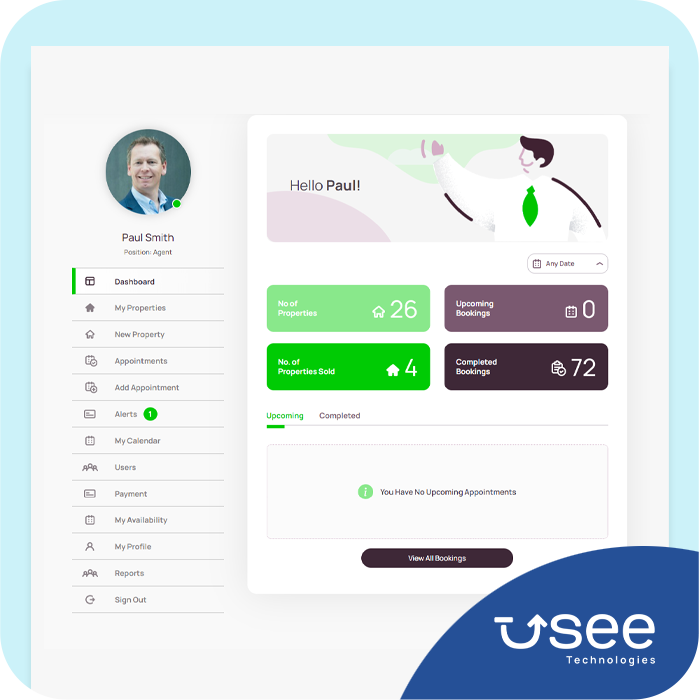
USee Technologies needed a SaaS web application that connects home buyers directly with estate agents, including 3D property tours. Every agency using the platform has its own branded login, so they can manage listings, contact buyers and update properties without relying on developers for every change.

  • Branded logins for each estate agency on the platform
  • 3D property tours and direct buyer contact built in
View more of our work
Can you trust us?

What clients say

These are verified reviews from Clutch and Google, not written by us. Every quote can be checked against the original review.

“Sam and the team have taken care of our website design, complex portal to link in with our management software and marketing management. Sam and the team are reliable, responsive and I would have no doubt in recommending them either for website design, SEO or Adwords management.”
Shane Jeavons, Sales Director, Jeavons
“Tom and the team (Especially Phillip and Rijo!) have been outstanding at supporting our HubSpot Website Development project. Amazing communication, turnaround and results, all for an extremely reasonable price. They truly feel part of the team, and have helped us accelerate our marketing efforts.”
Liz Teague, Roboshadow
“Web Choice were keen to understand both our short-term and long-term goals, and more than happy to advise on technical details. They even shared a couple of eBooks with zero obligation. Their patience and support across my detailed selection process were indefatigable and they consistently demonstrated commitment to the project's success.”
Jan Mikulin, Owner
“Since the new website and branding went live we saw an instant improvement in the quality of the new leads we were receiving. We have also received lots of positive comments about our new look branding. Working with Web Choice has been a breath of fresh air. They kept us up to date on every stage of the project through phone calls and emails. Because of the ease of the whole process and how impressed we were, we have now increased spend with Web Choice to help us with SEO & PPC.”
Phil Hussey, Managing Director, Advanced Card Bureau Ltd
“We have used Web Choice for 2 websites now and also our marketing/SEO for our hosting company. They were able to take our idea's and get it exactly how we envisioned it. They kept us updated on every step and the team were very quick to make any changes we needed. We now have an ongoing relationship with Web Choice and look forward to working with them more in the future and on our marketing campaigns.”
Mark Grindey, Director, UKBSS Group
“I vetted 4 providers and put them through a fairly strenuous knowledge test on web design, marketing, and SEO. Web Choice delivered an excellent looking, fast-loading website along with solid content and technical SEO. I like to move fast and they were able to keep up. We now rank position 1-7 for multiple search results. I'll be going back for updates in the future.”
John Foshee, CRO, Porter Logistics
“I run the largest B2B LinkedIn ads agency in the US. The Web Choice team are amazing. I've known the co-owner, Sam for years on LinkedIn. Followed his actionable tips for SEO and websites. We recommend Web Choice for any SEO, paid search or website requirements. Always excellent feedback and results. They are your team.”
Justin Rowe, Founder/CMO, Impactable

How it works

Our web app development process

Five stages, one team, and a project manager who keeps you updated throughout.

  1. Discovery and requirements

    We learn how your business runs, who will use the app and what success looks like, then document the requirements with you in plain English.

  2. Wireframes and UX design

    Every screen and user journey is mapped out in wireframes, so you can see and test how the app will work before development starts.

  3. Agile development

    We build in short cycles with regular demos, so you see progress early and can change direction without derailing the project.

  4. Testing and launch

    We check functionality, security, speed and browser compatibility, then deploy your app to a live server with monitoring in place.

  5. Support and growth

    After launch we look after hosting, maintenance and new features, using what your admin panel analytics tell us to decide what comes next.

Throughout: one point of contact.

Your dedicated project manager keeps you updated by phone and email at every stage, so you always know where things stand.

Budgeting

So how much does a web app cost to develop?

The cost of a web app depends on six things: the scope of work, your business workflows, the complexity of the user interface and user experience, the features and integrations required, the development framework, and where the development team is based.

Scope of work

How many user types, screens and modules the app needs, and whether it is a first version or a full platform.

Your business workflows

Simple, linear processes cost less to build than workflows with approvals, exceptions and several departments involved.

UI and UX complexity

A clean, standard interface is quicker to produce than a highly customised design with advanced interactions.

Features and integrations

Payments, messaging, reporting and connections to CRMs or ERPs each add development and testing time.

Development framework

Some frameworks come with more built in than others, which affects how much has to be written from scratch.

Team location

Rates vary between regions. Our Bristol-based team gives you UK accountability and a project manager in your time zone.

The more features an app needs, the longer it takes to build, and time is the biggest driver of cost. To give you an accurate price we need a detailed definition of your requirements. If you are not there yet, do not worry. We will work through them with you step by step, then send a clear, itemised proposal. You may also find our bespoke software development page useful if your project goes beyond the browser.

Get Your Free Quote
Timescales

How long does it take to develop a web app?

A minimum viable product (MVP) that focuses on core features can typically go live in 3 to 6 months. The two biggest factors are the overall complexity of the app and the framework chosen for the build. As more features, user roles and integrations are added, development time grows with them.

3 to 6 months

Typical time to launch an MVP with core features

Plan first

A detailed project plan and wireframes give you an accurate timeline before the build starts

Grow later

Launch the essentials, learn from real users, then add features in phases

Why Web Choice

Why choose Web Choice for web app development?

17 years of delivery

We have been building for the web since 2009, with more than 1,400 projects delivered for businesses in the UK and further afield.

Requirements before code

We make sure the right thing gets built. Our discovery process turns a rough idea into a clear specification you can budget against.

Technology matched to the job

Laravel, React, Node.js, Django or Angular: we recommend what suits your features, budget and growth plans, and explain why.

Built to be found

We also deliver SEO, AEO and GEO, so the public side of your app is structured for Google and for AI assistants such as ChatGPT and Gemini.

A team you can reach

You deal with a Bristol-based team and a dedicated project manager, not a faceless ticket queue.

Here after launch

Hosting, maintenance and new features come from the same team that built your app, so nothing gets lost in a handover.

FAQs

Web app development: frequently asked questions

Web application development is the process of designing, building and maintaining software that runs on a web server and is used through a browser, with nothing to download or install. Customer portals, booking systems, SaaS platforms and online dashboards are all web applications.

A website mainly presents information for visitors to read. A web application lets users do things, such as log in, save data, manage bookings, take payments or run reports. Many business sites combine both, with a public website in front and a web app behind a secure login.

A web app runs in any modern browser on desktop, tablet or phone from one codebase, so it is usually quicker and less costly to launch and update. A native app suits products that rely heavily on device features or app store distribution. A progressive web app sits in between, adding offline use and a home screen icon. We recommend the option that fits your users and budget.

There is no single best platform. The right choice depends on your features, integrations, budget and plans for growth. Laravel, a PHP framework, suits secure, data-heavy business applications. CodeIgniter suits lighter builds that need to move quickly. React and Angular suit highly interactive front ends, Node.js suits real-time features and APIs, and Python with Django suits data-heavy and AI-driven platforms. We explain our reasoning before any code is written.

A web app needs a web server, an application environment to run it, a programming language and framework, a database to store its data, and a front end built with HTML, CSS and JavaScript. Before any of that, you need a clear definition of what the app must do, and we can help you put that together.

Google Docs is a well-known example. You create and edit documents in your browser, share them with colleagues who can work on them at the same time, and keep working offline, with changes syncing to Google Drive once you reconnect. Online banking, webmail and online shops are other everyday examples.

The cost depends on the scope of work, your business workflows, the complexity of the user interface and user experience, the features and integrations required, the development framework, and where the development team is based. Once your requirements are defined, we send a clear, itemised proposal.

A minimum viable product focused on core features typically goes live in 3 to 6 months. Apps with more features, user roles or integrations take longer. A detailed project plan and wireframes allow us to give you an accurate timeline before development starts.

Yes. We connect web applications to CRMs, accounting software, payment gateways, booking tools and other third-party services through their APIs, so data moves between systems without manual re-entry. For Jeavons, for example, we built a portal that links in with their management software.

Yes. After launch we offer ongoing support, maintenance, hosting and new feature development, so your web app stays secure, up to date and ready to grow with your business.

Our team is based at Henleaze House Business Centre, 13 Harbury Road, Bristol, BS9 4PN. We have been building websites and web applications since 2009 and work with businesses across the UK and overseas, including clients in the United States.

Let's get your project started

Ready to build your web app?

Tell us what you want your web application to do. We will come back with honest advice, a recommended approach and a clear next step, with no obligation.


Email: info@webchoiceuk.com · Henleaze House Business Centre, 13 Harbury Road, Bristol, BS9 4PN

SEO & Websites For Revenue Not Vanity. Discuss your goals with a specialist today.